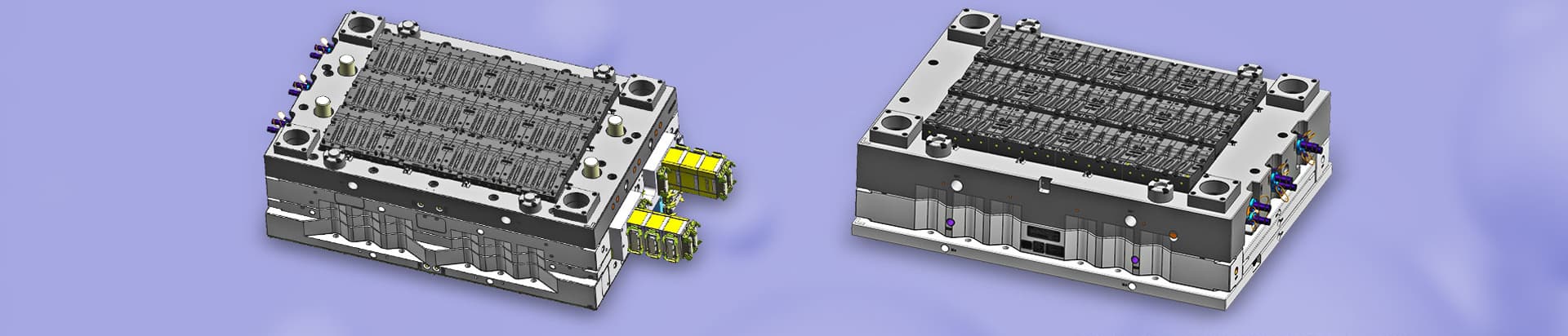
Rusting of plastic injection tooling is a common phenomenon. It not only affects the appearance of the mold, but also directly affects the overall quality of the mold. Therefore, mold rust is a problem that cannot be ignored. The following are the reasons and measures analyzed for your reference.
1. Products from the decomposition of molding materials
2. The resurgence of plastic injection tooling
3. Sweat on hands
1. The corrosion products (gas, residues) from the decomposition of the molding material to the injection molding mold are the most common. In order to prevent the mold from rusting, the most widely used method is chromium plating on the mold cavity. However, chrome plating treatment cannot fully solve the problem. This is because the decomposition product corrodes the deep part of the pin hole, and these places are the places that cannot be plated.
2. When the plastic injection tooling is cooled to below the moisture regain point, the moisture in the air regains the surface of the mold to produce water droplets, which will cause rust.
1. Short-term: Wipe the surface of the cavity with a cloth. Fully dry the molding material and lower the temperature of the barrel to prevent the material from decomposing. When molding is temporarily stopped, spray anti-rust agent on the mold cavity, and then close the mold.
2. Long-term: Turn the product material into a material that can decompose and does not corrode the mold. Easily decomposed materials include PVC, POM, EVA, PC and foam materials. Since the decomposition products have corrosive effect on the mold, if the plastic raw materials cannot be changed, the mold should be chrome plated. When the mold is not used for a long time, apply a layer of butter to the outside of the mold and the movable parts.

 Call us on:
  Email Us:
  1st Floor, Block1, No.3 Beiting Road, Houting Community, ShaJing Street, Bao'An District, Shenzhen City, Guangdong Province, China
  English
 Deutsch
 italiano
 русский
 français
 română
 العربية
 Español
 Polska
 日本語
日本語 한국어
한국어